Foundations
Two key research theories shape the approach to technology integration found in this portfolio. Universal Design for Learning (UDL) is a research-backed curriculum framework that addresses various different types of learners by offering multiple means of engagement, representation, and action. Technological Pedagogical Content Knowledge (TPACK) describes the three-way intersection of content knowledge, pedagogical knowledge, and technical knowledge that effective teachers must navigate while using technology-rich instruction.
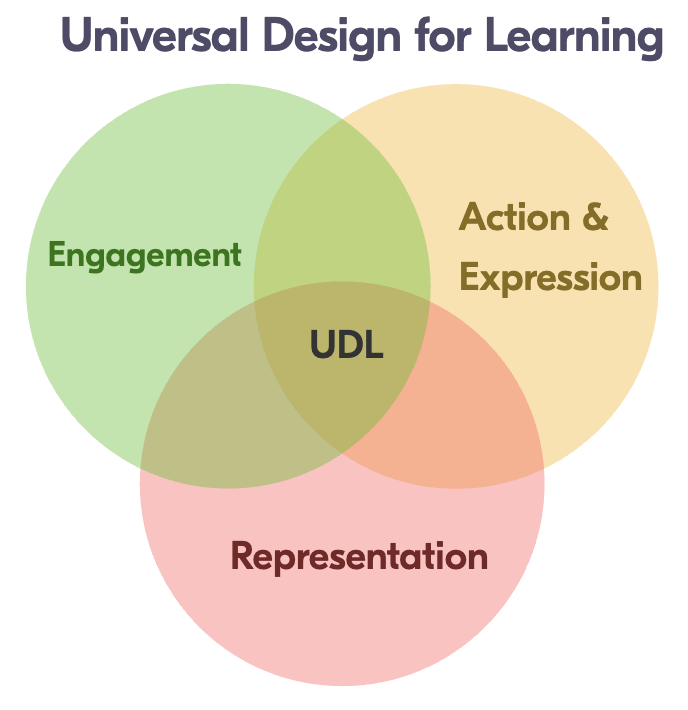
Universal Design for Learning is developed by CAST that utilizes concepts from neuroscience and cognitive research to cater to various different types of learners. The theory is organized around three core principles: providing multiple means of representation, multiple means of action, and multiple means of engagement. Research published by cast consistently shows that UDL-aligned instruction reduces barriers and improves access for students with diverse learning needs and backgrounds. When educators use UDL from the start they shift from reactive accomodations to proactive accomodations. Click the button below to visit the official CAST UDL Guidelines website, where you can explore the full framework and access practical resources for your own classroom.
Explore UDL Guidelines
→
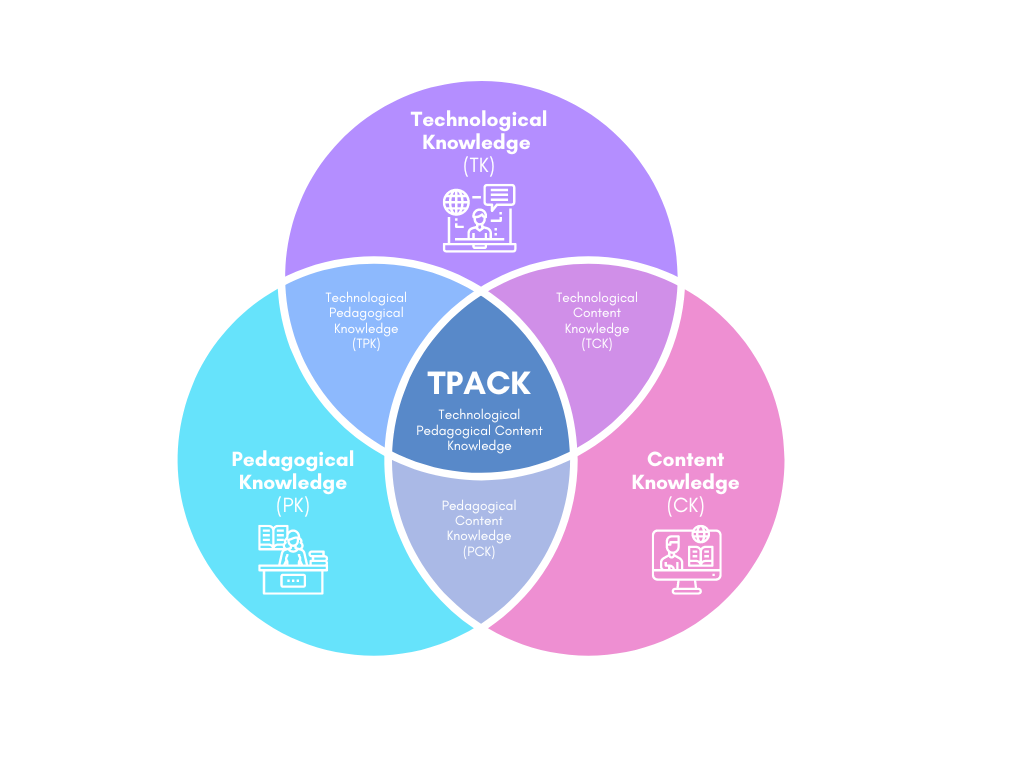
Technological Pedagogical Content Knowledge (TPACK) was introduced by Punya Mishra and Matthew J. Koehler in 2006. TPACK describes the knowledge a teacher needs when technology is brought into instruction, capturing the overlap between curriculum knowledge, how the curriculum is taught, and which technologies are used. Studies show that teachers familiar with TPACK make more informed decisions about technology integration, using tools that support the learner. TPACK has become a widely cited theory in teacher education programs and has been used to design professional development that builds on all three core domains. Educators have applied TPACK across various subject areas including mathematics, science, and art. Click the button below to visit TPACK.org to explore resources for building your own Technological Pedagogical Content Knowledge.
Visit TPACK.org
→